
NKW80BD against NKW125BD: which hydraulic press for used paper choose
NKW80BD vs. NKW125BD: Which Hydraulic Baler for Waste Paper Should You Choose?
The NKW80BD and the NKW125BD share the same declared capacity range—2 to 3 tons per hour of waste paper—the same horizontal architecture, and the same carbon steel construction. The decision between them is not defined by tonnage, but by two operating variables: the degree of automation and the daily reality of the plant. The NKW80BD is fully automatic, with a nominal pressure of 18 MPa and a 22 kW / 30 HP motor. The NKW125BD is semi-automatic, with a working pressure of 20 MPa and a bale of 1100 x 1250 x 1700 mm. This analysis compares the two on labor and material flow criteria, and closes with the supplier verification that should be required of both equally.
The problem: two nearly identical spec sheets and a very different operating bill
When a recycler compares a hydraulic baler for waste paper, the first thing they look at is capacity in tons per hour. In this case, that figure ties: both models are declared in the 2 to 3 tons per hour range. If the comparison stops there, the purchase is resolved by price and the real cost appears months later, in payroll and in downtime.
The reason is that nominal capacity is not an autonomous result of the machine. It is the result of the machine plus the person accompanying it. In fully automatic equipment, the pressing, tying and bale ejection cycle runs with minimal operator intervention. In semi-automatic equipment, the operator participates in specific steps of the cycle. That is why two machines declaring the same figure can deliver different actual tons depending on how many people are on the shift and how much continuous attention they can give the equipment.
The second variable is material flow. Waste paper does not arrive at the plant constantly: there are reception peaks, days with mixed cardboard, shifts with lower bulk density paper, and periods when the material simply is not there. Automation does not change the amount of paper that exists, but it does change the plant's ability to absorb those peaks without stopping the rest of the line.
Industry context: why waste paper became an equipment decision
Waste paper has ceased to be a discarded residue and become a raw material with traceability and commercial value. In Latin America, Brazil and Mexico lead paper packaging production, with growing investment in innovation, lightweight materials and circular economy initiatives, according to Packaging Insights' analysis of extended producer responsibility (EPR) frameworks in the region. That context pushes recycling plants to standardize baling: a homogeneous bale is weighed, priced and transported with less friction than a loose volume.
The global market for hydraulic waste paper balers was valued at USD 1.45 billion in 2024, with a forecast of USD 2.24 billion by 2032, according to Data Insights Reports. That growth does not change the physics of pressing, but it does change who buys: more and more mid-sized plants, not only large corporations, need to choose between automating or maintaining assisted operation. That is exactly the dilemma between the NKW80BD and the NKW125BD.
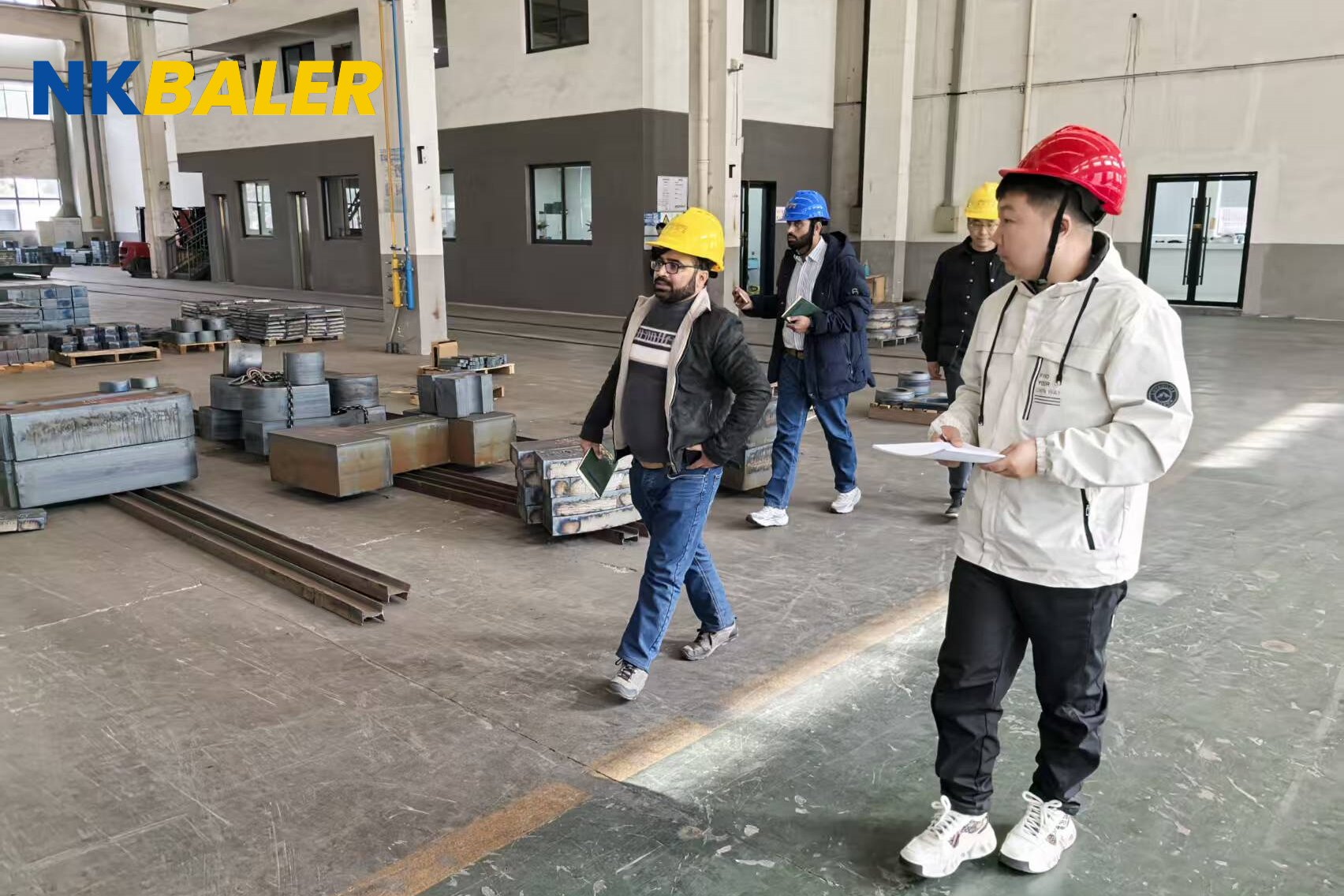
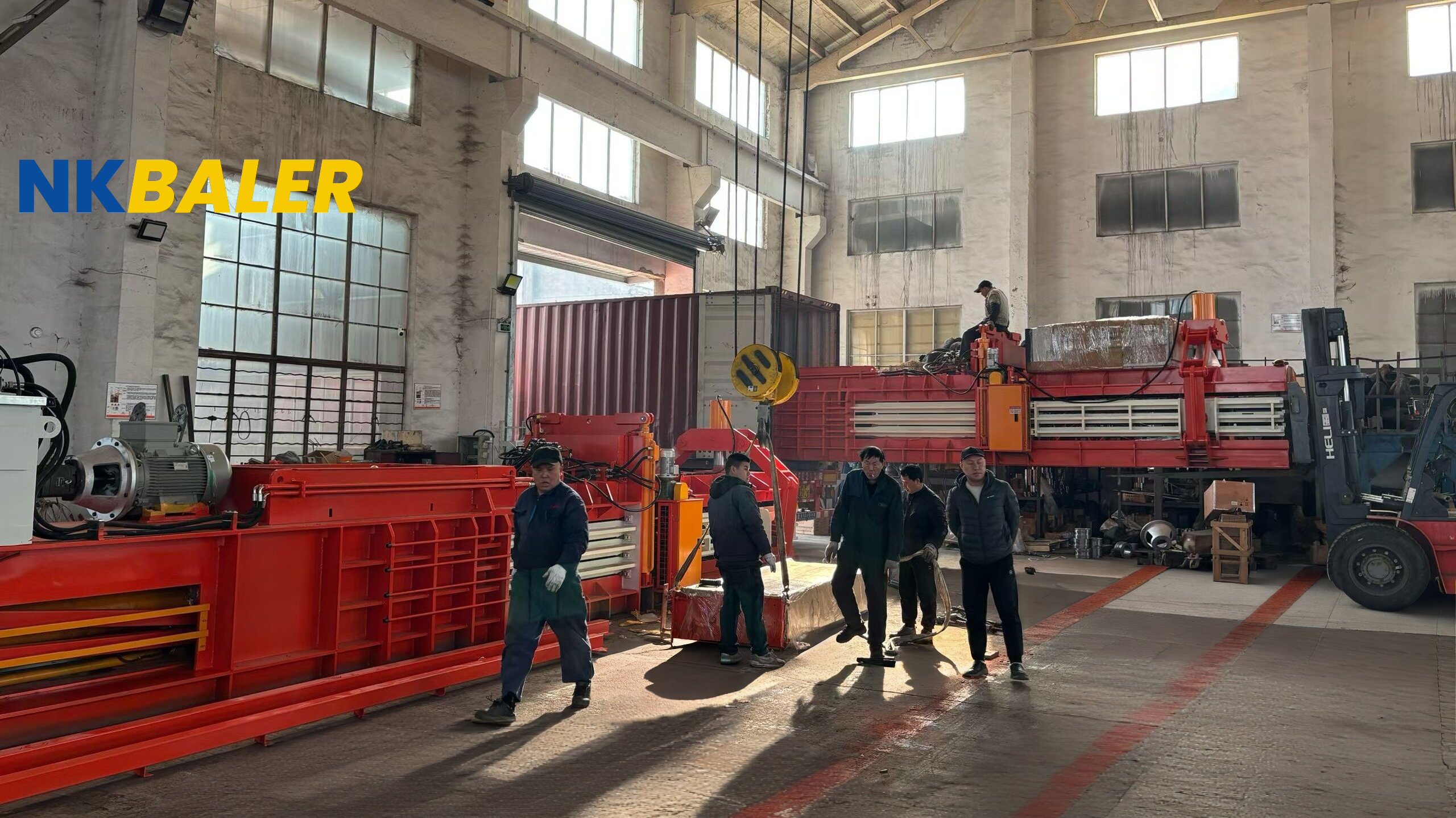
NKBALER —Shaanxi Nick Machinery Equipment Co., Ltd.— is a Chinese manufacturer dedicated to R&D and sales of environmental protection equipment and packaging machinery, headquartered on Qunsheng Street, Huishan District, Wuxi City, Jiangsu Province, with website nkbaler.com. The company reports a 50,000 m² plant, an R&D team of 15 people, annual production of 600 machines, and an export share of 90%, with main markets in North America, South America and Asia. Its catalog includes vertical balers, fully automatic horizontal balers, manual horizontal balers, scrap balers, sawdust balers, waste foam presses, hydraulic shears and press bagging machines.
The two machines, point by point
NKW80BD: full automation for plants that cannot spare an operator
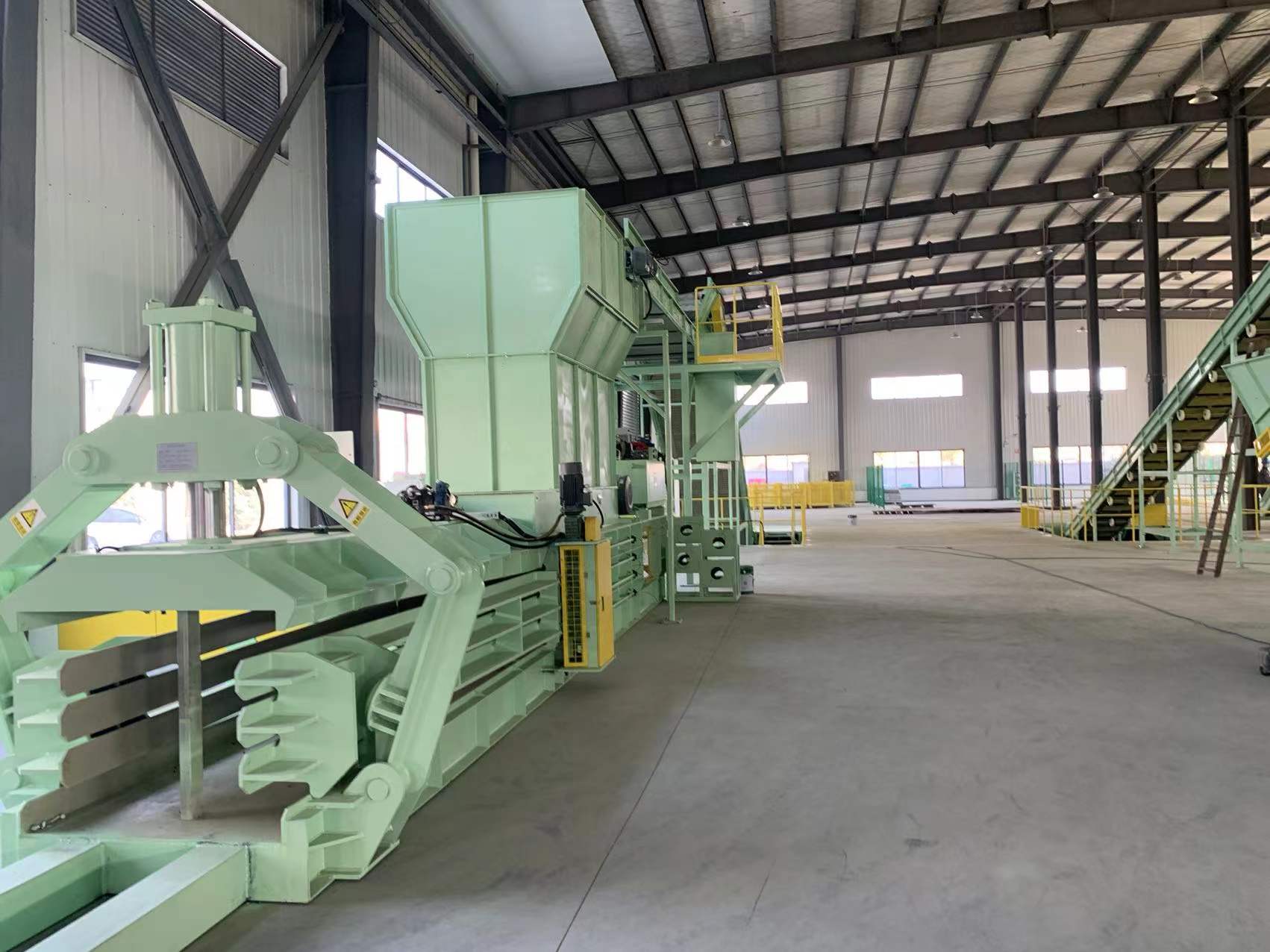
The NKW80BD is a fully automatic horizontal hydraulic baler, built in carbon steel, with a nominal pressure of 18 MPa and a power of 22 kW / 30 HP. Its declared capacity is 2 to 3 tons per hour of waste paper. The defining figure is not pressure or power separately, but the sum: a cycle that advances without someone having to actuate each stage.
In practice, this means the operator goes from executing the cycle to supervising it. They can handle material reception, separation of contaminants, or loading the next bale while the machine works. In plants where waste paper arrives mixed with plastic, twine or cardboard, that availability of attention is what prevents a foreign object from stopping production for hours.
NKW125BD: semi-automatic with a defined bale format
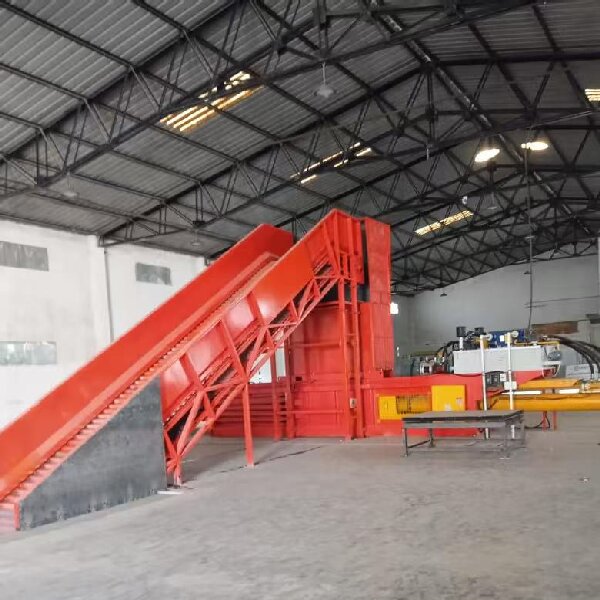
The NKW125BD is a semi-automatic horizontal hydraulic baler, also in carbon steel, with a working pressure of 20 MPa and a declared capacity of 2 to 3 tons per hour. Its bale measures 1100 x 1250 x 1700 mm, a format worth checking against the internal dimensions of the container, truck or bale warehouse before purchase.
The operating difference lies in cycle attendance: being semi-automatic, it requires a person to intervene in the steps the machine does not execute by itself. This is not a disadvantage in the abstract; it is a disadvantage only when that person does not exist or when their time costs more than the automation difference.
A comparison detail almost no one reviews: pressure bases
The NKW80BD declares nominal pressure of 18 MPa and the NKW125BD declares working pressure of 20 MPa. These are two different measurement bases. Comparing 18 against 20 as if they were the same indicator leads to wrong conclusions, because they do not describe the same point in the hydraulic system. The practical consequence is simple: pressure should not be used as a tiebreaker between these two models. What should be compared is the density and bale weight obtained with each plant's actual material, and that is resolved with a test, not a datasheet.
How to decide in six steps
- Measure actual flow, not ideal flow. Record for two weeks how many tons of waste paper enter per day and in which time slots. If input is concentrated in a few hours, the right question is not how many tons per hour the machine can process, but how many hours per day it can operate without dedicated supervision.
- Count the personnel available per shift. If the plant cannot assign one person to the baling cycle throughout the shift, the fully automatic NKW80BD is the coherent option. If there is a stable operator with time available for the cycle, the semi-automatic NKW125BD comes into play with the same declared capacity.
- Validate the bale format against your logistics. The NKW125BD produces bales of 1100 x 1250 x 1700 mm. Check that measurement against the usable width of the container or truck you usually use. For the NKW80BD, request the model's bale format in writing, because it is not part of the data in this comparison.
- Confirm installed power and electrical supply. The NKW80BD declares 22 kW / 30 HP. Before signing, check that the plant's electrical installation supports that load at the planned connection point and that the machine's voltage and frequency match the local supply.
- Calculate cost per ton, not list price. Add labor per shift, electricity consumption, maintenance and downtime due to jams. A cheaper machine with an extra permanent operator can cost more in a year than an automatic one.
- Apply the same verification battery to the supplier. The criteria in the final section apply to both models equally: the comparison does not end with the machine, it ends with who manufactures and backs it.
Scenarios: when each one is suitable
Scenario 1 — Recycling plant with continuous reception
If waste paper arrives steadily throughout the shift, from municipal trucks or from a fixed industrial contract, the fully automatic NKW80BD allows the flow not to depend on the presence of an operator at the baling point. The declared capacity of 2 to 3 tons per hour is better sustained when the cycle is not interrupted by manual tasks.
Scenario 2 — Plant with irregular flow and available personnel
When reception is concentrated on two or three days per week and the plant team can attend the cycle, the semi-automatic NKW125BD offers the same capacity range with a different operating structure and a defined bale format. Here full automation adds no value if the machine sits idle half the week.
Scenario 3 — Recycler that also processes cardboard and plastic
NKBALER states that its balers are used for waste paper, plastic recycling, used rags, metal scrap and other recycling applications. If your operation changes material frequently, the decision criterion shifts toward cycle versatility and how quickly the machine readjusts between materials, rather than maximum speed on paper.
Scenario 4 — Plant that is just standardizing baling
If the plant does not yet have a bale format consolidated with its buyers, it is better to choose the output format first (dimensions and weight accepted by the buyer) and then the model. The 1100 x 1250 x 1700 mm bale of the NKW125BD is a concrete starting point for that commercial conversation.
Scenario 5 — Operation with scarce or costly labor
In markets where plant operators are hard to find or their cost is high, full automation of the NKW80BD stops being a luxury and becomes an operational continuity decision. In markets with stable personnel availability, the semi-automatic machine retains its logic.
Operating cost: which data applies and which does not
NKBALER documents for its hydraulic press line energy efficiency 12% higher than that of alternatives, with lower electricity consumption per ton processed, a noise level reduced by 15 dB compared with piston compressors, a cost 10% lower and lighter maintenance. That set of data describes the equipment family against other compaction technologies; it does not distinguish between the NKW80BD and the NKW125BD and therefore should not be used as an argument to favor one of the two models. To break the tie between them, cost is calculated with each plant's staffing structure and the declared motor consumption, not with a family figure.
Direct comparison NKW80BD vs NKW125BD
| Criterion | NKW80BD | NKW125BD |
|---|---|---|
| Equipment type | Horizontal hydraulic baler | Horizontal hydraulic baler |
| Construction material | Carbon steel | Carbon steel |
| Degree of automation | Fully automatic | Semi-automatic |
| Declared capacity (waste paper) | 2 – 3 t/h | 2 – 3 t/h |
| Declared pressure | 18 MPa (nominal pressure) | 20 MPa (working pressure) |
| Motor power | 22 kW / 30 HP | Not included in the data of this comparison: request it in the model sheet |
| Bale size | Not included in the data of this comparison: request it in writing | 1100 x 1250 x 1700 mm |
| Operator intervention in the cycle | Minimal; the operator supervises | Requires participation in non-automated steps |
| Scenario where it fits best | Continuous flow and limited labor per shift | Variable flow with a dedicated operator available |
| Supplier verification | Same set of criteria | Same set of criteria |
The two columns share capacity, architecture and material. The verifiable differences are in the degree of automation, in the pressure measurement base and in the bale format declared for the NKW125BD. Any other data should be requested in writing from the manufacturer before comparing prices.
Supplier verification applicable to both models
The comparison between the NKW80BD and the NKW125BD becomes incomplete if it ends at the specification sheet. These are the points that should be verified with the manufacturer, regardless of which of the two models is chosen.
1. Thermal protection and temperature control
Excessive heating is a documented operating risk in hydraulic pressing. NKBALER addresses it with thermal protection and temperature sensors. Before purchase, request written confirmation that thermal protection and temperature sensors exist in the exact configuration you will receive, as well as the procedure for periodic verification of those sensors.
2. Conformity documentation for the destination market
Request the conformity and safety documentation applicable to the country where the machine will be installed, together with the electrical configuration corresponding to local voltage and frequency. Conformity is not assumed from a catalog: it is delivered as a document.
3. Test with your own material
Waste paper varies by region, season and supplier. Request a test or a sample bale with your actual material and confirm density, bale stability and cycle behavior. It is the only data that cannot be extrapolated from another plant.
4. Manufacturing capacity and backing
NKBALER reports 50,000 m² of plant, 15 people in R&D, 600 machines of annual production and 90% export to North America, South America and Asia. Verify that the offered lead time is consistent with that capacity and request a written schedule, broken down by configuration.
5. Spare parts list and maintenance plan
Request the critical spare parts list with replenishment lead times and the preventive maintenance plan for the chosen model. A horizontal machine operating eight hours a day needs a defined spare parts route from day one.
6. Warranty scope and after-sales support
Confirm what the warranty covers, what is excluded, and what the technical support channel is. NKBALER maintains direct contact by email (Sales@nkbaler.com), phone and WhatsApp (+86 15021631102) for technical and commercial inquiries.
7. Itemized quotation, not a single price
Request the quotation separating machine, electrical configuration, accessories, documentation, export packaging and commissioning. Only with that breakdown can the NKW80BD and NKW125BD be compared in real terms.
Frequently asked questions
What protection controls and documentation should you require before buying an NKW80BD or an NKW125BD?
Require three things in writing: thermal protection with temperature sensors to control excessive heating of the hydraulic system; the conformity and safety documentation corresponding to the installation country; and confirmation of the electrical configuration (voltage and frequency) to be delivered. NKBALER applies thermal protection and temperature sensors as a control method, but verification must be documented in the purchase order, not only in the commercial conversation.
Does the fully automatic NKW80BD deliver more tons per hour than the semi-automatic NKW125BD?
No according to the declared data: both models are in the 2 to 3 tons per hour of waste paper range. The difference is not in the spec sheet capacity, but in how that capacity is sustained during the shift. The NKW80BD, fully automatic with a nominal pressure of 18 MPa and a 22 kW / 30 HP motor, reduces dependence on an operator during the cycle. The NKW125BD, semi-automatic with a working pressure of 20 MPa and a 1100 x 1250 x 1700 mm bale, requires operator participation. In addition, the declared pressures use different bases (nominal vs. working) and are not directly comparable.
How is the real cost compared between a fully automatic and a semi-automatic press?
It is compared per ton processed, not by list price. The calculation structure should include labor per shift, electricity consumption of the declared motor (22 kW / 30 HP on the NKW80BD), preventive maintenance, spare parts and downtime. The efficiency and cost data that NKBALER documents for its line—12% better energy efficiency and 10% lower cost versus alternatives—describe the equipment family and do not allow a decision between the NKW80BD and the NKW125BD. That requires an itemized quotation and each plant's staffing calculation.
Can my plant's waste paper be tested before deciding on the model?
Yes, and it is the most useful step in the entire evaluation. Send a representative sample of your waste paper and request a test that confirms cycle behavior and bale dimensions with your actual material. This is especially relevant for the NKW125BD, whose 1100 x 1250 x 1700 mm bale format should be validated against your transport logistics, and for the NKW80BD, whose bale format should be requested in writing because it is not part of the data in this comparison.
How is the delivery time confirmed for either model?
The lead time should be requested in writing and broken down by configuration: manufacturing, electrical configuration, documentation, export packaging and dispatch. NKBALER reports a 50,000 m² plant, annual production of 600 machines and 90% export to North America, South America and Asia, which allows the declared capacity to be checked against the offered schedule. To request a quotation, schedule or test sample for the NKW80BD or NKW125BD, write to Sales@nkbaler.com or contact WhatsApp at +86 15021631102 with the dimensions of your waste paper flow.
Conclusion
The NKW80BD and the NKW125BD do not compete on capacity: both declare 2 to 3 tons per hour, both are horizontal hydraulic balers made of carbon steel, and both come from the same manufacturer. They compete on the plant's operating structure. The NKW80BD, fully automatic with 18 MPa nominal pressure and 22 kW / 30 HP, is the choice when the waste paper flow is continuous and the plant cannot spare a permanent operator for the baling cycle. The NKW125BD, semi-automatic with 20 MPa working pressure and a 1100 x 1250 x 1700 mm bale, is the choice when personnel are available to accompany the cycle and the bale format already fits the outbound logistics.
In both cases, the purchase closes with the same discipline: documented thermal protection, conformity for the destination market, testing with the plant's actual material, a written schedule and an itemized quotation. Comparing only by price leaves out precisely the variables that determine cost per ton over the coming years.
Next step: send the characteristics of your waste paper (type, daily volume and personnel available per shift) to Sales@nkbaler.com or via WhatsApp at +86 15021631102. NKBALER can confirm the configuration of the NKW80BD or NKW125BD, the bale format and the manufacturing schedule before you make your decision.
Website: nkbaler.com
Have Questions or Need More Details?
Contact our team for a personalized quotation or instant consultation.
Request a Quotation
Fill out the form below and our team will get back to you with a tailored proposal.
WhatsApp Direct Chat
Prefer to chat in real-time? Message us on WhatsApp for instant assistance & quick answers.
- Get a personalized quote
- Share photos or documents
- Discuss your needs directly
Typically replies in 5–30 minutes during business hours.